“I’ll start when things settle down” sounds like a neutral plan, as if waiting costs nothing and you can pick the project up later at the same point you left it. It doesn’t work that way. Waiting has a price, and with the cost of waiting to start a side hustle, you pay it in months you can’t recover.
It is November 2026. If you begin this month, you will be a year in by November 2027. If you wait for a calmer season, that anniversary moves back by however long the calm takes to arrive. This article puts numbers and names on what that delay removes, then gives you a short exercise to measure it with your own figures.
Why “I’ll start when things settle down” is a decision with a price tag
Putting something off feels like choosing nothing. In practice you are choosing to keep your current setup: one employer controlling your hours, your pay and how secure your income is. That is a decision, and it has consequences like any other.
Life also settles down less often than people expect. A new project at work, a family event, a move, or a tired stretch always seems to be coming. If “calm” is the condition for starting, the start date keeps sliding, because there is always another busy season behind the current one.
If you want the case for why a single income source carries risk, it is covered in why one paycheck is a riskier plan than it feels. This article assumes you already see that and asks a different question: what does each extra month of delay take from you?
Three things go missing when you wait:
- The months of recurring commissions that could have been building up.
- The age and trust your published content would have gained.
- The skills you would have practised in the meantime.
The months you can never get back: how recurring commissions stack up
The Wealthy Affiliate referral model pays commissions for as long as each referral stays subscribed. That detail matters more than it first appears, because it means income can accumulate rather than reset each month.
Here is the arithmetic, using round numbers that are not a forecast. Suppose you gained one subscribed referral every month for a year, and every one of them stayed. In month one you have one paying referral, in month two you have two, and by month twelve you have twelve. Add up the paying referral-months across the year and you get 1 + 2 + 3 and so on up to 12, which is 78 months of commission.

Now suppose you start twelve months later. In that first calendar year you collect zero of those 78 months. The later start also moves every following month back, so you stay a year behind the person who began sooner, and the gap never closes by itself.
Real life is messier than this. Referrals are not guaranteed, they don’t arrive on a schedule, and some people cancel. The shape still holds: recurring income rewards the earliest start, because each referral that stays subscribed keeps paying while you work on the next one.
Most of the cost of waiting is hidden because it looks like nothing happening. A month with no commissions you never started building doesn’t show up as a loss anywhere. It simply isn’t there.
Trust takes time to build, and the clock only starts when you publish
An article that has been live for a year is in a different position from one published this morning. Search engines need time to find, index and test new pages, and readers who find the site need to see a record of consistent, useful posts before they act on a recommendation.
None of that begins until something is published. You can think about starting a website for six months, read about niches and plan topics, and your site will still have exactly zero days of age. The only way to accumulate that history is to publish and let the days pass.

This is why a rough first article published now beats a polished one that stays in your head. The published one starts aging immediately. By next autumn it will be a year old, and it can be updated and improved at any point along the way. An unwritten article has no age to build on.
Trust also works on you as the writer. Your confidence in your own advice grows as you see which posts people read and which questions they ask. You only get that feedback from published work.
If you want to see what that first stretch usually looks like for someone with a day job, what affiliate marketing really looks like in your first year walks through it.
The skills you skip by waiting, and why the first awkward articles matter
Affiliate marketing is a set of practical skills: choosing a topic readers actually search for, structuring an article so it answers a question, writing a recommendation that is honest and useful, and setting up a site that loads and reads well. None of these come from reading about them. They come from doing them badly a few times and then doing them less badly.
The first articles you write will probably be awkward. The headings may be clumsy, the intros too long, the advice a little vague. That is normal and it is useful, because each one shows you what to fix in the next.
Someone who starts now and writes one article a week will have around fifty by this time next year. Their fiftieth will be much better than their first, and that improvement is a skill they own. Someone who waits will meet the same awkward first draft a year later, with the same learning ahead of them and a year less to use the result.
There is a second cost here that people overlook. When you delay, you don’t only miss the practice, you also keep the belief that you can’t do it yet. A first published article, however rough, replaces that belief with a fact: you wrote something and put it online.
If one of the things holding you back is the fear of making beginner mistakes, five mistakes that stop employees from building their first business names the most common ones, so you can avoid some and recognise the rest when they happen.
Run your own cost of waiting: a five-minute exercise with your numbers
You don’t need anyone’s statistics for this. You need a pen, a calculator and honest answers to four questions about your own situation.

Step 1: Write down what a month of extra income would do for you. Pick a specific figure that would make a real difference, such as covering a bill, adding to savings or paying off a debt. Use your own number, not one from an ad.
Step 2: Write down how many months you have already said “later”. Count from the first time you seriously thought about starting. Be honest. If it has been eight months, write eight.
Step 3: Multiply. Take the figure from Step 1 and multiply it by the months from Step 2. That is the amount of income you have already postponed at your chosen target level. It is not income you would certainly have earned, because early months rarely reach a target. It is a measure of how big the gap has become.
Step 4: Do the same for the next twelve months. Ask yourself whether you expect your life to be calmer a year from now than it is today. If your honest answer is “probably not”, then waiting is unlikely to give you better conditions, and the only thing it adds is another twelve months on the total.
Then add one more line, which has no price attached: the number of published articles you would have by next November if you started this week and wrote one a week. Put it next to your Step 3 total. The comparison is usually enough to settle the question.
What a useful first week looks like
A common reason to wait is not knowing what to do first, so it helps to shrink the first week to a few concrete tasks. A good first week is small and has an end point you can check.
- Pick a rough topic area. It does not need to be perfect. It needs to be something you can write about without much research and that a reader might search for.
- Open your account and look around. Spend one evening on the first lesson so you know where things are and what comes next.
- Write down ten questions your future reader might ask. These become your first article topics.
- Draft one article. Do not edit it for an hour. Finish it, then edit it once.
- Decide on your recurring slot. Choose the evenings or weekend hours you will use and put them in your calendar.
Notice what is not on the list: a logo, a perfect site design, a content calendar for the whole year, or a long list of tools. Those can wait, and none of them starts the clock on your site’s age.
If you want a fuller sequence once the first week is done, a realistic roadmap out of the 9 to 5 sets out the stages around a working schedule.
Starting small this week without blowing up your job or your evenings
Starting does not require giving up sleep or telling your employer anything. It requires a small, repeatable block of time that fits the life you already have.
Choose a block you can protect: two evenings of 45 minutes, or one longer weekend session. Put it in your calendar the way you would a dentist appointment. For this week, the aim is only to finish the first lesson and write one rough draft.
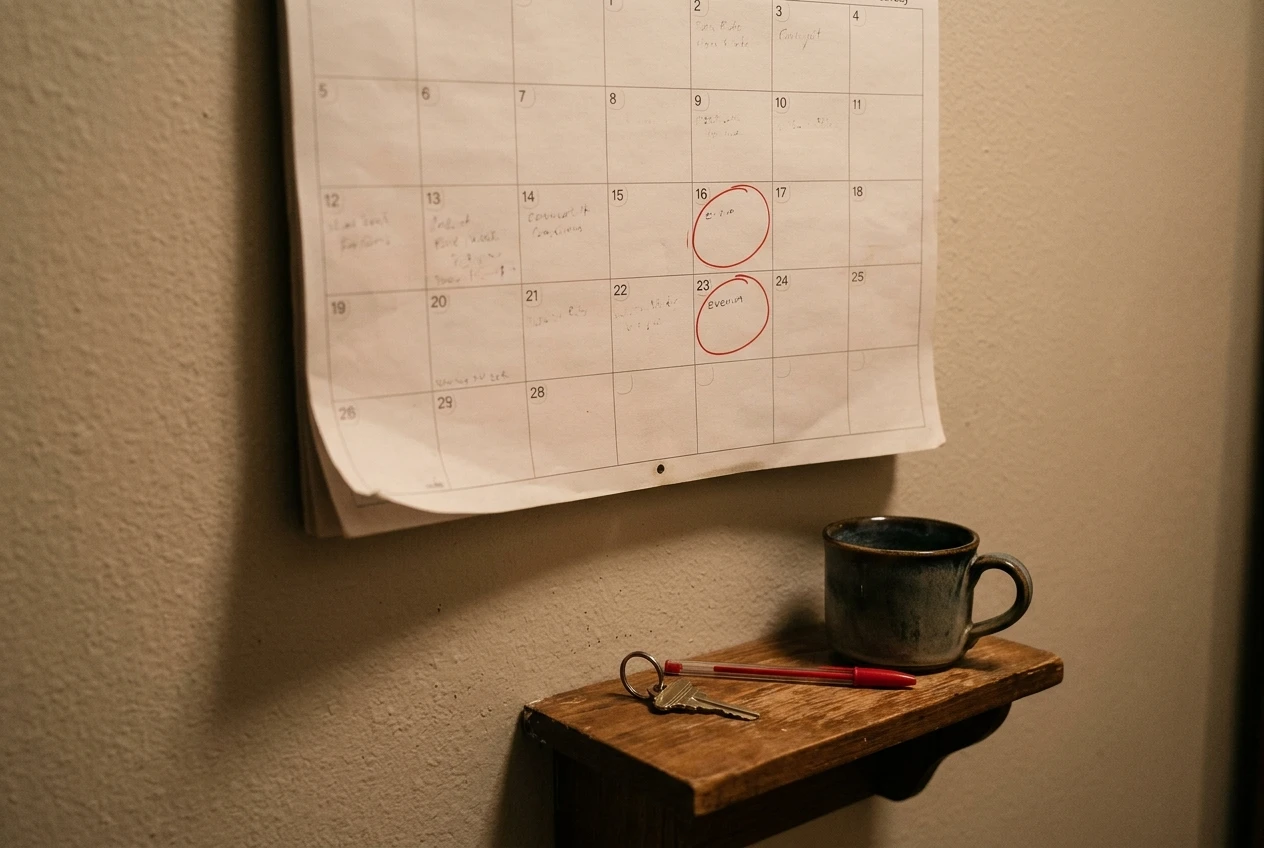
Keep the work separate from your job. Use your own device, your own time and your own accounts, and check your employment contract if you are unsure whether outside income needs to be disclosed. That is a quick check worth doing in the first week.
Tiredness is the real obstacle for most people with a full-time job, more than the number of hours available. Starting an online business while working full time is an energy problem, not a time problem goes into that in detail, including how to place the work at the point in your day when you have something left.
Finally, treat this as a small experiment. If the first week goes badly, you have lost a few evenings and gained information. If you keep waiting, the cost is the full year, and you get no information at all.
If this landed, take one small step this week: join Wealthy Affiliate through this site and spend a single evening on the first lesson. You don’t have to be ready, you just have to start the clock.
Leave a Reply